
11. The Path of Most Resistance
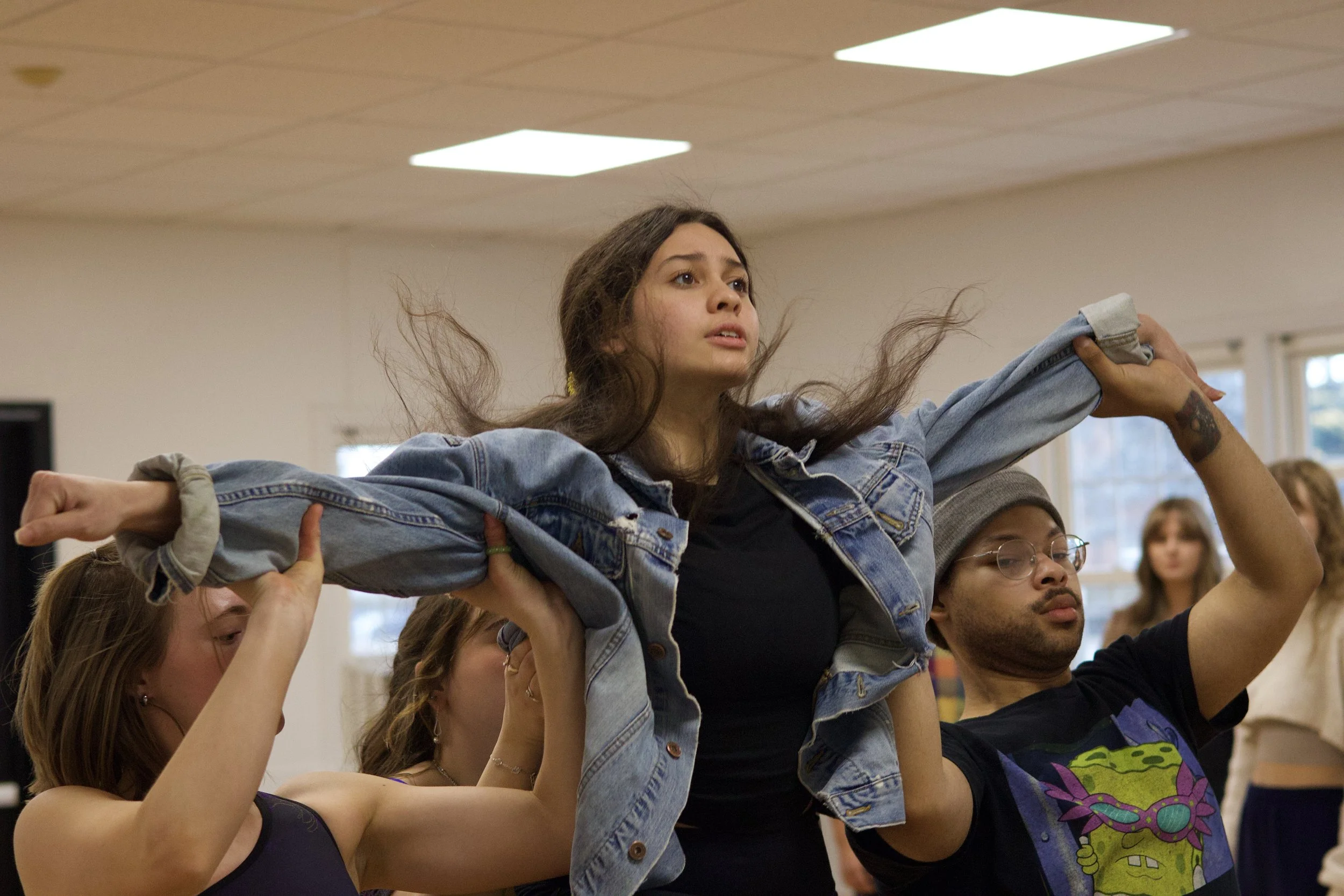
Kayla Joya (Sien) held aloft by Momo Greenwell, Camille Larson, & Terrel Hall - 2025 LIU Rehearsals
Writing for Sien…Vincent’s former lover…was difficult from the start. I knew that a character with such an unmistakably tragic endpoint needed to carry that gravity from the moment she entered. I set out to write something that lived in the world of Amy Winehouse. My thinking was simple: if the song felt like Amy, the audience would instinctively brace themselves for what’s coming.
I hit a wall musically, so I shifted my focus to the lyric. I had the phrase “the path of most resistance” scribbled in my Moleskine. I sat outside the MET at Lincoln Center and decided to write out Sien and Vincent’s relationship longhand, in prose..no structure, no music…just to see if it would spark anything. Somewhere along the way, the sentences started finding meter. It felt closer to poetry than dialogue, so I followed that thread.
I knew I didn’t want it to be straight rap. I love rap, but it’s not in my bones, and I didn’t want to write some inauthentic half-version of a Talib Kweli beat that sounded like Lin-Manuel if his entire creative well ran dry. (Don’t expect to see that for a while…). I started thinking instead about semi-rhythmic spoken word like Talking Heads’ “Once in a Lifetime” or Pearl Jam’s “I’m Open.” The verses of those songs that live in the space between speech and melody.
The track is soaked in ’80s electronic drums. The main loop comes from a Roland CR-78. The snare is from a Simmons kit. I actually tracked one down to record it and quickly learned that playing a Simmons kit feels like drumming on a granite countertop. Absolute murder on your wrists.
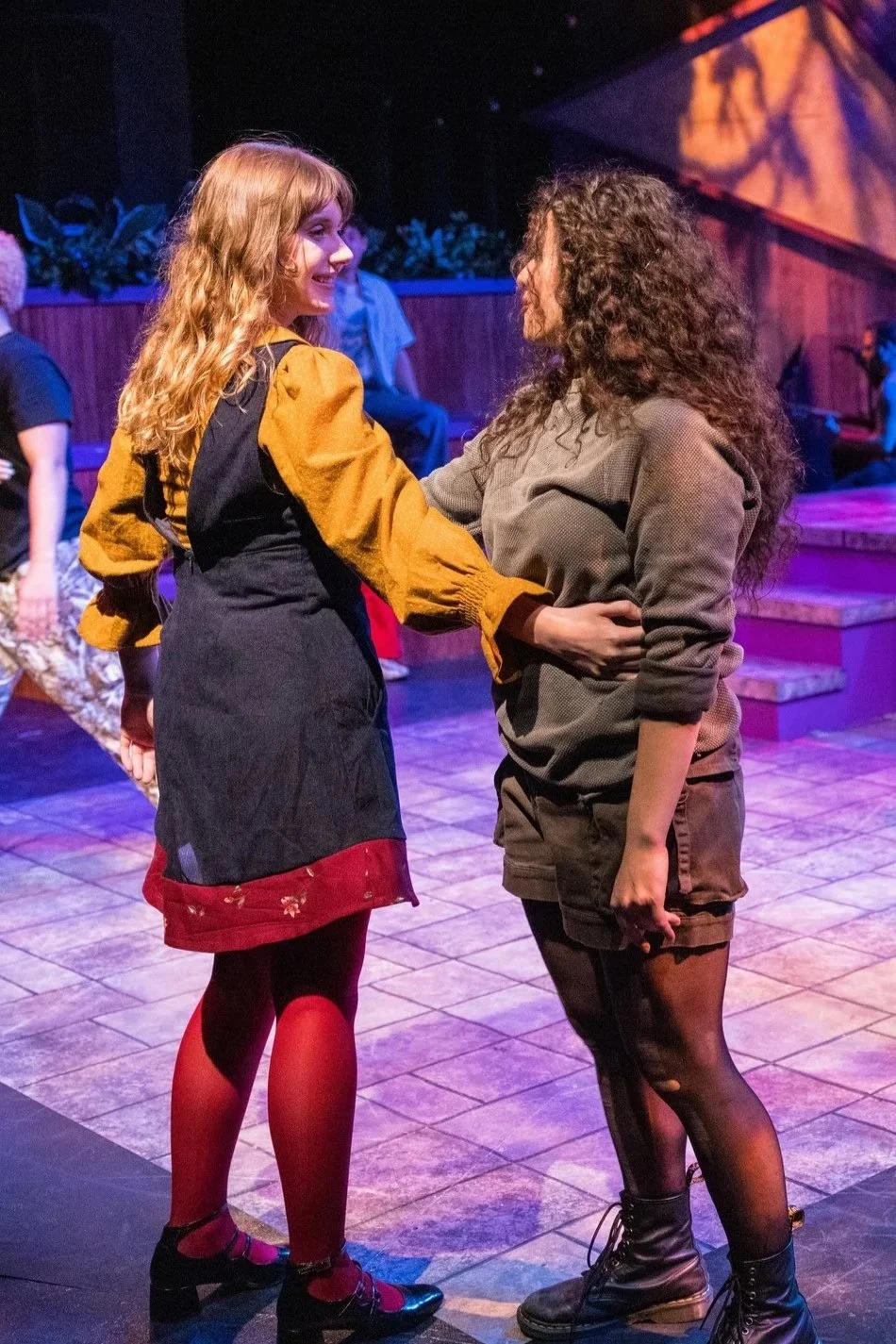
Kaira Gula (Vincent) & Kayla Joya (Sien) - 2025 LIU
The refrain in the chorus starts by asking, “Can you carry me?” and then shifts to “Will you carry me?” as Sien sings about shutting down while life keeps hitting her harder and harder. Kayla Joya, who sings Sien on the album, has unmistakable shades of Billie Holiday in her voice…especially in the way she almost moans through the vocal lines. There’s a lived-in ache there that feels effortless and devastating at the same time. Her performance didn’t just serve the song; it defined it. This recording will absolutely be the blueprint for future performers of the role.
There’s a two-bar viola solo played by Victoria Arsenicos. When I was recording the demos, I was working with a pretty rough solo viola patch that never quite did what I wanted. Those two bars lived entirely in my head. I kept reminding myself, don’t forget to talk to Victoria about the expression there.
Of course, day comes, the first take starts rolling, and when we approach the solo I realize I never said a word. I’m mid-panic, already kicking myself. And then it happens. Exactly what I’d been hearing all along. Melancholy. Lamenting. Human. She found it instantly, without a word. I didn’t need to stop the take. I didn’t need to explain.
I’ll always be grateful she answered the call when I was looking for a violist for Natasha, Pierre… This was one of those moments that reminded me why you write things down and then trust musicians to finish the thought better than you ever could.
After I finished the song proper, I couldn’t shake a specific image: Sien dressed like Peter Gabriel on the So tour…flowing white button-down over a white t-shirt…doing a backward stage dive into the ensemble. I have no idea why that image lodged itself in my brain, but it wouldn’t leave. So I leaned into it and wrote a Genesis-esque synth solo at the end that feels like a musical stage dive.
Maybe one day we’ll actually get to do the real thing.