
“vincent” cast recording and the stew of authenticity
I grew up listening to the same few things over and over again. Not because I was disciplined. Because I didn’t have many choices.
I would steal my dad’s cassette player…the one he used for work, as a party clown. Jojo the Magic Clown. That alone probably explains a lot. I’d sit on the floor and play the same tapes until the sound felt burned in. Billy Joel. Genesis. A bootleg of the Hair movie soundtrack that sounded like it had been recorded through a wall. Born in the U.S.A. (warped enough to feel haunted). And a strange Andrew Lloyd Webber compilation that didn’t make sense to me but felt important anyway.
Eventually I got a CD player. That felt like a technological miracle. I started borrowing CDs from the library…two or three cast recordings at a time. That’s how I found Tommy and Jesus Christ Superstar. I never returned Tommy. It felt like it had chosen me. Superstar, I returned. I loved and respected it too much not to. (Yes…I recognize the contradiction and no I don’t understand it.)
I already knew one song from a compilation, but the voice on that version felt wrong. Too clean, too careful. Like someone pretending. Hearing Murray Head tear into that score cracked something open. I didn’t have language for it yet, but I felt it in my chest. Rock music telling the truth. Or at least trying to.
Trips to Sam Goody or Coconuts became events. CDs when I could afford them, cassettes when I couldn’t. The first ones I bought were Little Shop of Horrors and Joseph and the Amazing Technicolor Dreamcoat. My dad had shown me Little Shop one day and I fell in love. It was dark and funny and dangerous. When the plant explodes and Levi Stubbs mutters “ohhh shit,” it felt illicit. Like I wasn’t supposed to hear that. Which made it better. So I had to have that. Joseph came from a clerk’s recommendation because they were out of JCS. The original broadway recording with Laurie Beechman still feels right to me. It knows what it is.
Around that time, my brother saw Phantom. The highlights cassette lived in my mom’s car. I became obsessed almost immediately. I needed the full thing. I memorized it before I ever saw it live. I still know it. It’s lodged somewhere permanent. That kind of memorization only happens when something hits you before you know how to protect yourself. Test me…I still know it.
At the same time, I was gaming constantly. My brother’s NES & SNES were constantly co-opted from him (sorry, Mike, about the save files I DEFINITELY fucked up) and Sega Genesis…the one system that was actually mine. Mega Man. Zelda. Castlevania. Sonic. My Mount Rushmore of videogame franchises. That music mattered as much as anything else I was hearing. The pulse. The swing. The melodrama. The repetition. The way it made emotional space without words. I didn’t realize it then, but it was teaching me how to structure feeling.
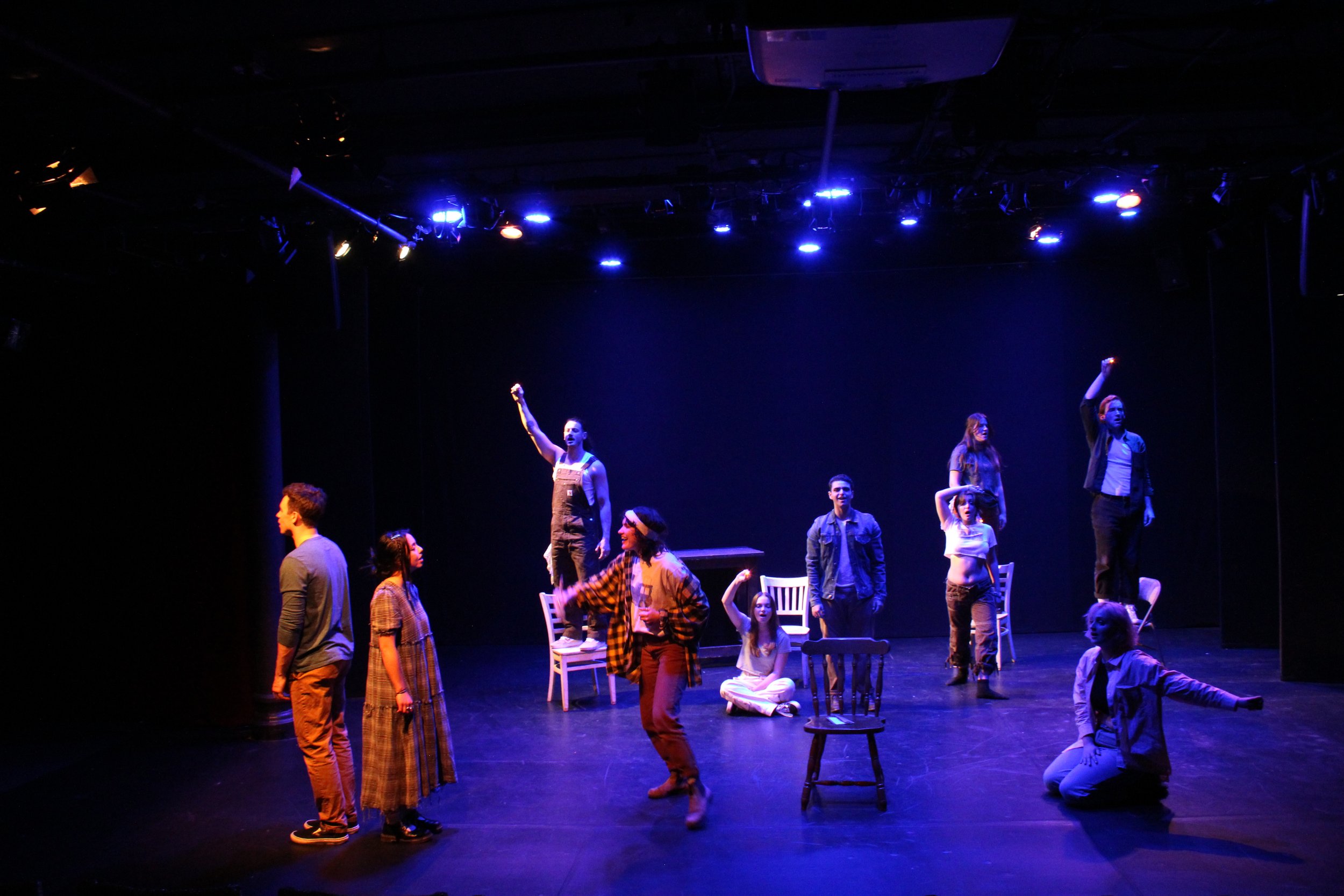
“Travel the Stars” - 2023 NYTF @ Teatro Late
I was also obsessed with film scores. John Williams, especially. I stole my brother’s Star Wars CDs (Jesus, I stole a lot of his stuff…) and played them until they started skipping. “The Asteroid Field” from Empire still lives in my body. I could probably sing it out loud, badly, with full commitment. …I don’t know why I said probably…I definitely could.
And then there were the bands. Green Day. Pearl Jam. Nirvana. Jeff Buckley. Genesis. Weezer. I wanted music that sounded like someone meant it. Like they were risking something. And all of them filled that void. So many more but my brain poured those out today.
That was the stew. All of it happening at once. So when I learned piano and drums, it wasn’t about style. It was about survival. That was the language already inside me.
Now, when I started writing Vincent, none of those influences were conscious. They just came out. Every sound in that show exists because of what I was fed.
The first version wasn’t honest. It worked, technically. But it wasn’t right. I was writing a biography because I thought that was the responsible thing to do. Structurally it was safe. Familiar. It felt like something I could explain. That was the problem.
Alyssa Kakis came on as director because I trusted a feeling. No interview. Just instinct. That could have gone badly. It didn’t. The process was hard. There were personality clashes. There were mistakes…especially mine. I didn’t let go enough. I was learning how to share authorship in real time.
My friend, Anthony Brindisi music directed that first production. I trusted him completely, and the band was unreal. Post-quarantine musicians who just wanted to play. That energy mattered. The music demanded it.
The show sold out. That felt good. But it still didn’t feel done.
Then the New York Theater festival. Then the real shift. Alyssa pushed the show toward its core. Vincent became female-presenting. The world became modern Brooklyn. The language snapped into place. The runtime forced us to cut it down to 90 minutes. “Travel the Stars” which was a mid act 2 number, became the finale. Suddenly the show knew what it was about. It wasn’t about Van Gogh’s life. It was about the struggle of the artist as a whole. That struggle for validation.
Ben Covello came on as music director and brought a different ear. Different instincts. That tension was productive. The music at the festival ran on pre-recorded tracks—necessity over preference—but it worked. We won awards (best score and best direction), but more importantly, the piece was breathing.
Afterward, we realized something simple: the show worked because it stopped where it did. The rest could go.
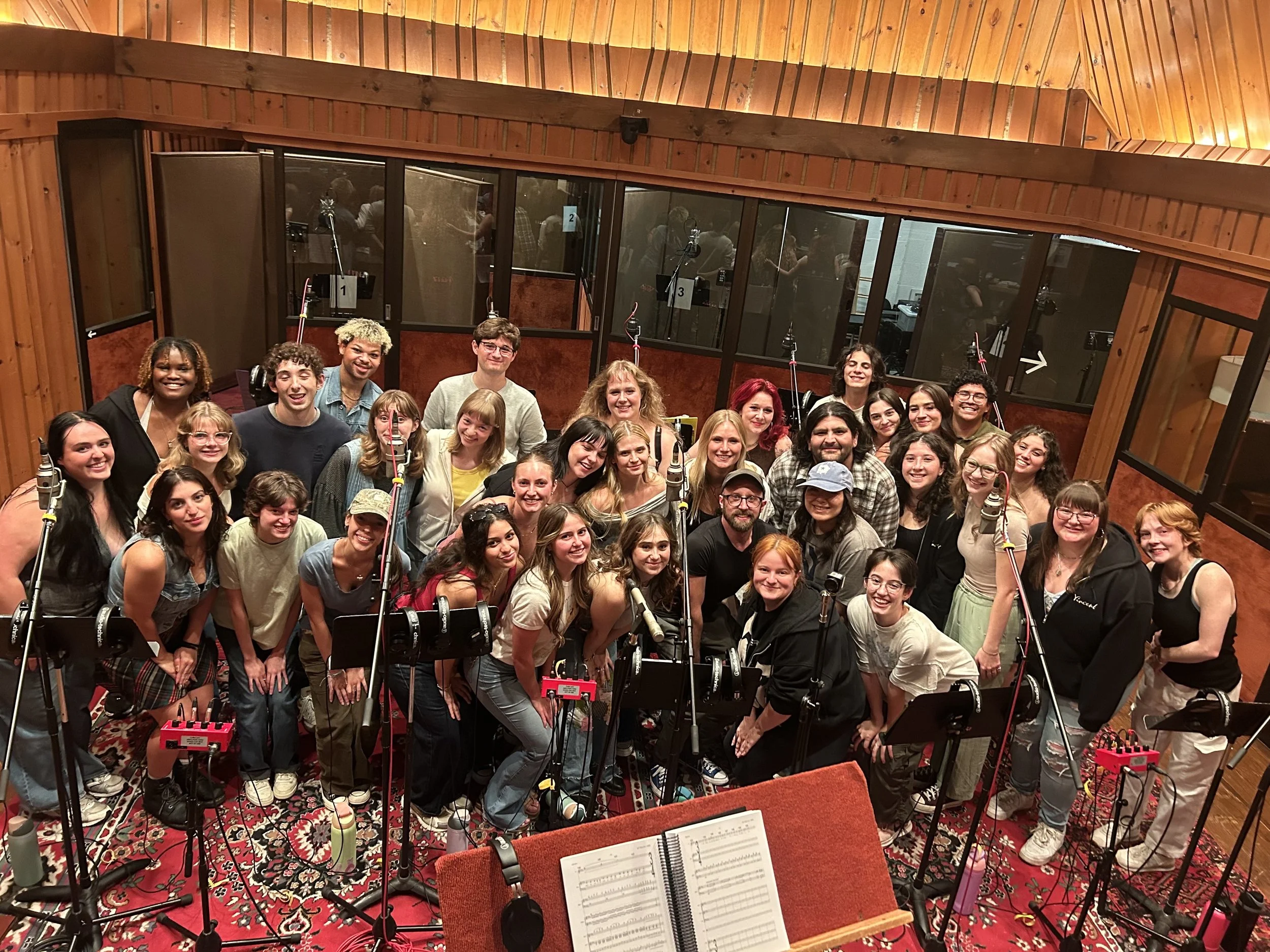
Power Station at Berklee NYC
I was music directing at Long Island University. It was during my second show with them (Natasha Pierre…) that Alyssa and I started pitching the show to universities. LIU didn’t really do new works but we pitched it to them anyway. Little did I know…they were looking to start a new works program…and low and behold LIU took a chance on it. We workshopped for two weeks. We argued. We listened. The actors had agency. Music changed because it needed to. That kind of room is rare. We all savored it.
The production that followed was the best process I’ve ever been part of. Everyone showed up. Everyone mattered. Five sold-out audiences. No cynicism. Just work and joy.
At closing, people kept asking about a cast album. I sadly said “ahhh maybe.” But I knew deep down it was oo expensive. Unrealistic.
Then at lunch one day Alyssa said, “Why not?” And that was it. The spark that started this fire.
We crowdfunded. The entire cast and management team from the LIU production was asked to record and help crowdfund. They did it. I can’t believe that had the love of the process that much they wanted to devote more time to it. So…when I booked the studio…I knew it had to matter.
We recorded at Power Station at Berklee NYC…the same room where Bowie recorded Let’s Dance. That felt unreal. And grounding. Truly one of the greatest moments of my life was standing on that stand in-between conducting the vocalists and looking into a corner and recognizing from a black and white photo of Stevie Ray Vaughan. I’m still shaky about it.
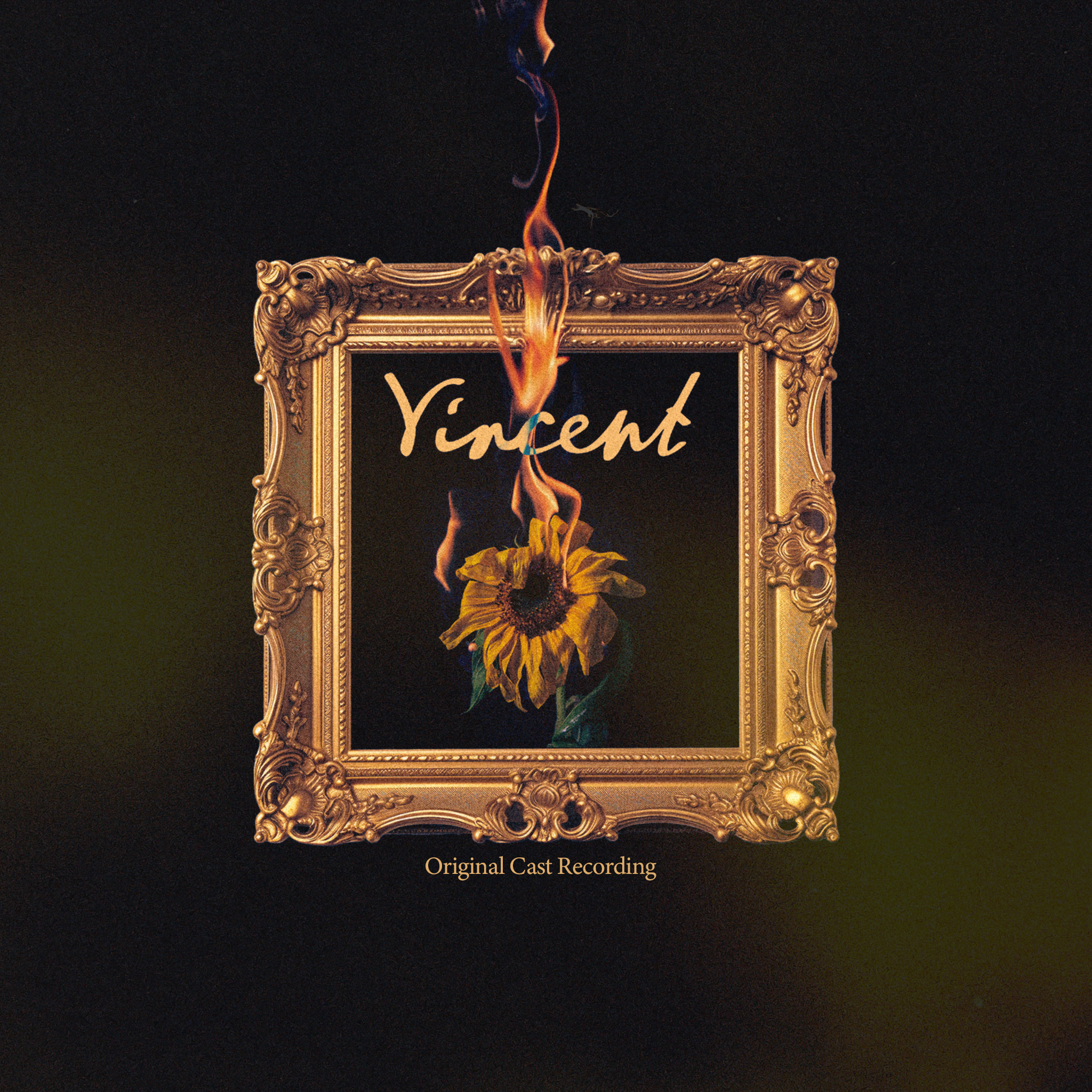
Cover art designed by Alexandria Cote Nance
The album sounds like my upbringing. Pop-punk edges. Video game synths. 70s cast album rawness. No pitch correction. No smoothing things out. If somebody accidentally clanks against their water bottle during the best take, it stays. That’s the document.
On January 23rd, the first single drops. On April 6, 2026, the full Original Cast Recording of Vincent is released.
Between now and then, I’ll talk about the tracks. The accidents. The choices. The moments that survived. I’ll try to highlight the incredible talent that went into this. There’s so much. People at the absolute top of their game giving everything they could to make this album happen. I would be nowhere without everyone involved.
This album is what happens when a lifetime of influences stop fighting and finally agree to share the same room. It’s what happens when enough people shrug and say, “why not,” and mean it. There was never money in this. No illusion of getting rich, no tidy return on investment. We walked in knowing that. Which means every sound here exists for one reason only: the rush of making something that mattered to us, and the need to tell this story the best way we knew how. If we did our job, you’ll hear that joy when you listen…the electricity that only shows up when passion is the only thing powering the room.