
8. Burn Up the Sun
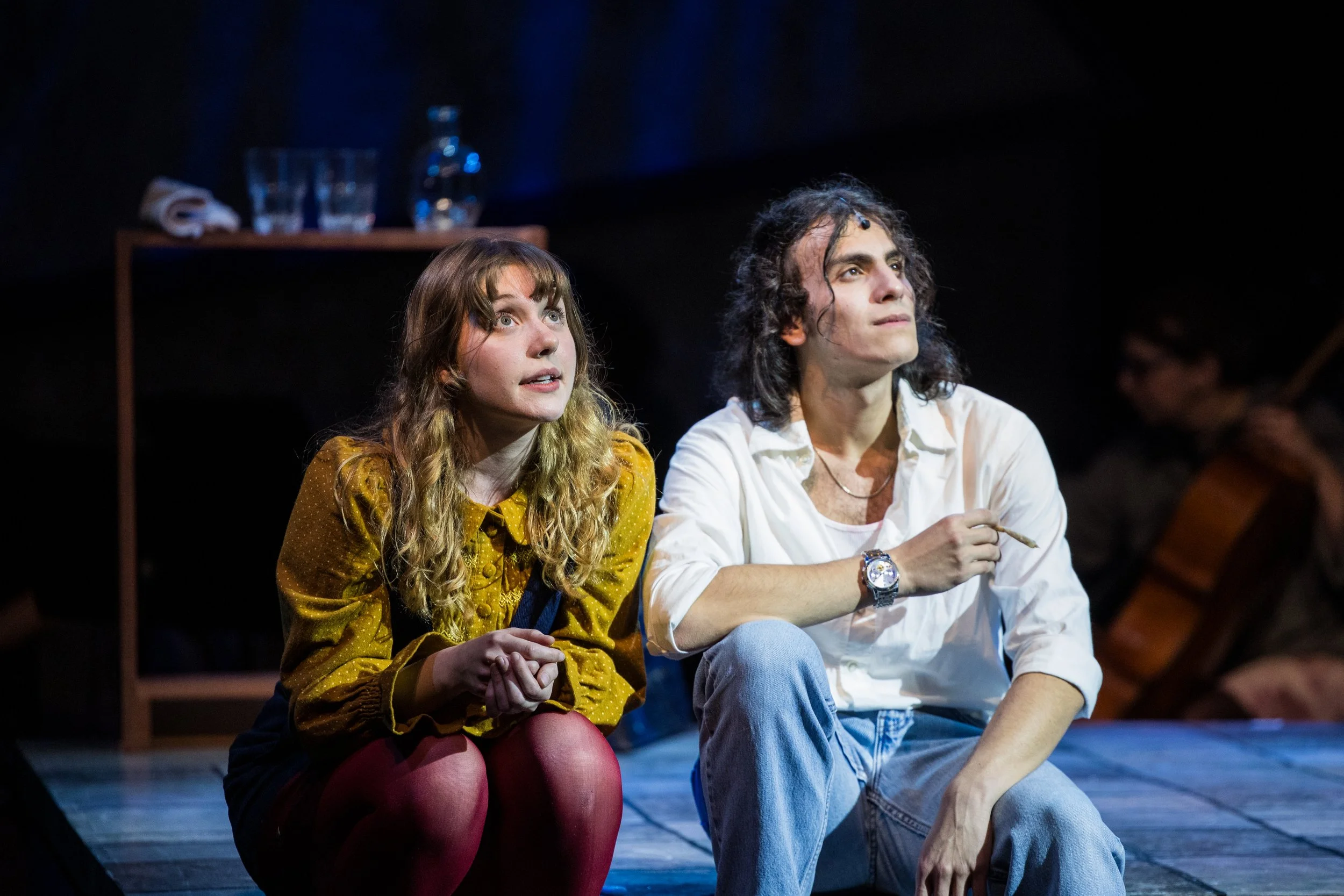
Kaira Gula & Cristian Velasquez talk about the stars - 2025 LIU
The Paul section of this song was written first. Up to this point, we’ve mostly seen him as distant, or as a high-functioning bullshit artist…performing confidence for everyone in the room. I wanted to give him a moment that showed his genuine love of the work, so it would be clear why Vincent admires him.
The phrase Burn Up the Sun comes from Doctor Who. For anyone unfamiliar: it’s a British sci-fi series that’s been running since the 1960s, about a humanoid alien who travels through time and space, usually with a companion who helps ground the story. In one particularly devastating episode, the Doctor’s companion…a person he’s very clearly in love with…is trapped in an alternate dimension she can never return from. He uses the power of a dying star to project himself briefly and says, “I’m burning up a sun just to say goodbye.” For Paul, the pull toward art feels that intense. Creating is worth the cost. Even a catastrophic one.
In the choruses, we hear the “passion motif” in its fullest form. Vincent’s version from Active Mellon Collie is buried. Wrapped in wailing guitars, piano, and drums. She sings her own line over it, struggling to surface. Paul, meanwhile, sings the motif plainly. Clearly. He knows exactly what he loves, and he isn’t conflicted about it.
Originally, the opening section was spoken dialogue between Paul and Vincent. It worked on paper, but not in the room. It needed to be sung.
I was headed home to work on it and my train was delayed. Every announcement on the platform was preceded by the same four-note jingle outlining a major-seven chord. It sounded like something Jeff Buckley might have written. When I got home, it was the first thing I played on guitar. The rest of the piece poured out quickly after that. I really dug into the Jeff Buckley influence to accentuate the vulnerability. This is one of the rare moments in the show where Vincent is able to articulate exactly what she feels without interference.
Musically, Vincent’s section sits in D, while Paul’s lives in E. The transition happens when Vincent ends on the IV chord of G, which causes the shift into Paul’s section to feel like the key moves both up and down at the same time. It’s deliberately unsteady. It leaves you unsure of how Paul is going to respond to Vincent’s vulnerability.