
16. Human Glow
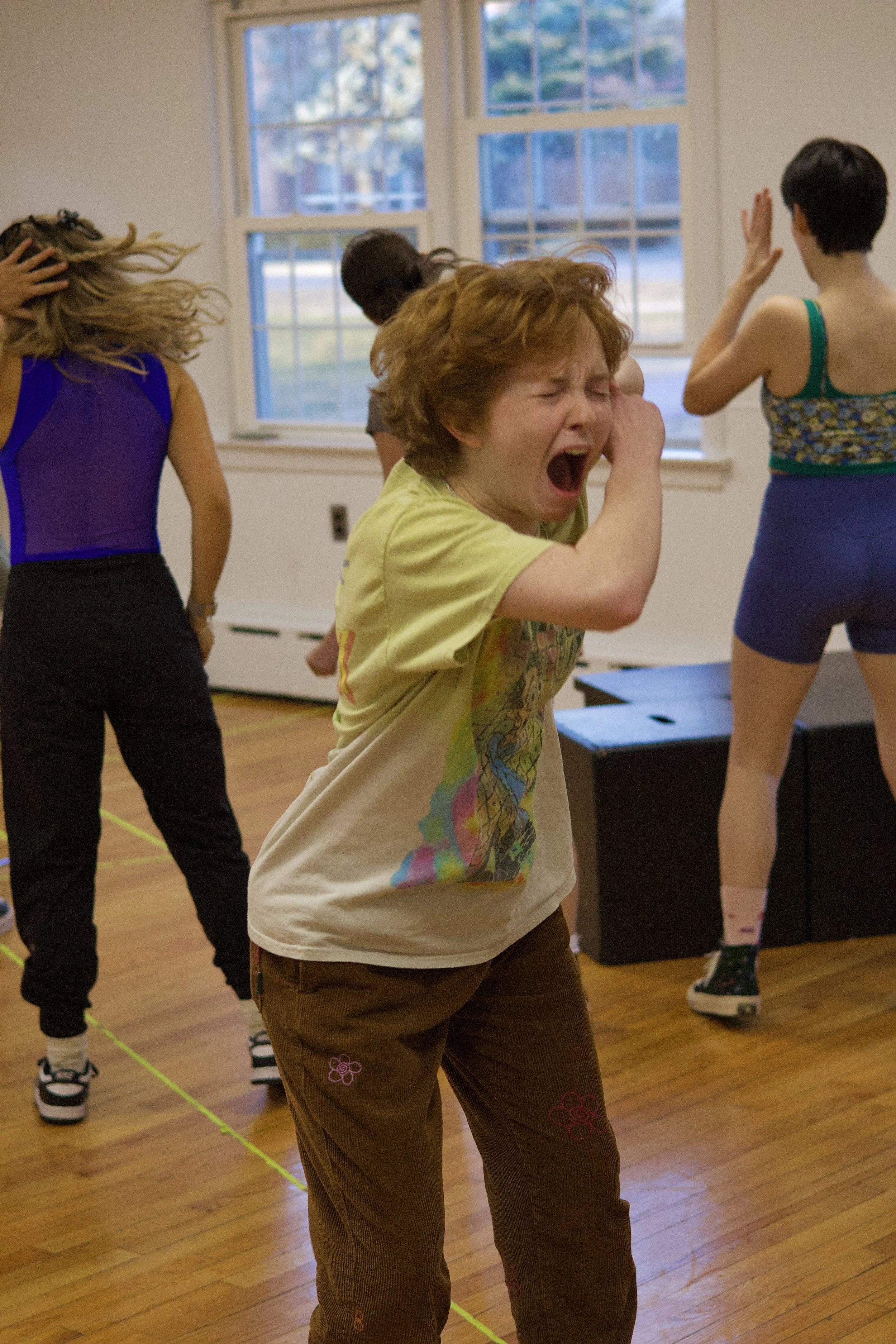
Elsa Gustafson - 2025 LIU Rehearsal
Vincent severing her ear was always going to be the Act I closer. The act itself was never meant to be a surprise. Everyone knows it happens. What mattered to me was the road there. I wanted the curtain to fall on the emotional inevitability of it. Maybe the audience feels it coming a mile away. Maybe they spend the whole song quietly begging history to blink. Either way, since no one truly knows what happened in that room, I had an enormous amount of freedom to shape the moment.
Someone read an early draft of Vincent and generously walked through it with me, beat by beat. They weren’t a theater person, which honestly made their feedback even more valuable. Most of what they said helped sharpen the show. But there was one note I fundamentally disagreed with. They felt this moment needed to be darker. More chaotic. Atonal. Like a Krysztof Pendereck piece: overwhelming, violent, consuming.
I couldn’t disagree more.
When I’ve been truly devastated by a breakup, a massive failure, or the slow realization that something I love is slipping away…I don’t scream. I don’t thrash. I don’t explode like Tommy Wiseau in The Room and start violating red dresses. I sit. I go numb. I become frighteningly calm. I tell myself, quietly and relentlessly, you put yourself here. I am what I am. I built the conditions for this collapse. It’s not chaos. It’s the eye of the storm. Total devastation, and nothing moving.
Vincent Van Gogh once wrote, “A great fire burns within me, but no one stops to warm themselves at it, and passers-by only see a wisp of smoke.” Being able to musicalize that line verbatim unlocked the entire moment for me. It wasn’t just poetic (as most of Vincent’s real life letters were), it was diagnostic. Vincent saw his soul as a human glow: something capable of warmth and comfort if anyone would dare get close. But it’s buried. Smothered. Burnt down so far that all anyone notices is the smoke.
That glow. That unfiltered human truth, is who we are without pretense. And in our show, Vincent feels like she’s actively burning it out herself. The terror isn’t the pain. It’s the question of what happens when there’s nothing left to burn.
The final section uses what I call the “climb motif.” It’s just two chords, cycling through inversions, creating the illusion of ascent while never actually going anywhere. You feel like you’re rising, but you’re stuck. This motif appears throughout the score, and here it’s paired with the paint-stroke vocals from the opening…all of Vincent’s voices colliding at once. Past, present, fear, hope, obsession. Everything compresses until there’s nowhere left to go and the song ends mid climb.
And in that stillness…not chaos, not noise…she breaks.
Blackout.